
Epoxy Garage Flooring
in Russellville, AR
A garage floor that shrugs off tires, tools and spills while looking like it belongs to the rest of the house.
Your Garage Should Feel Like Part of Your Home
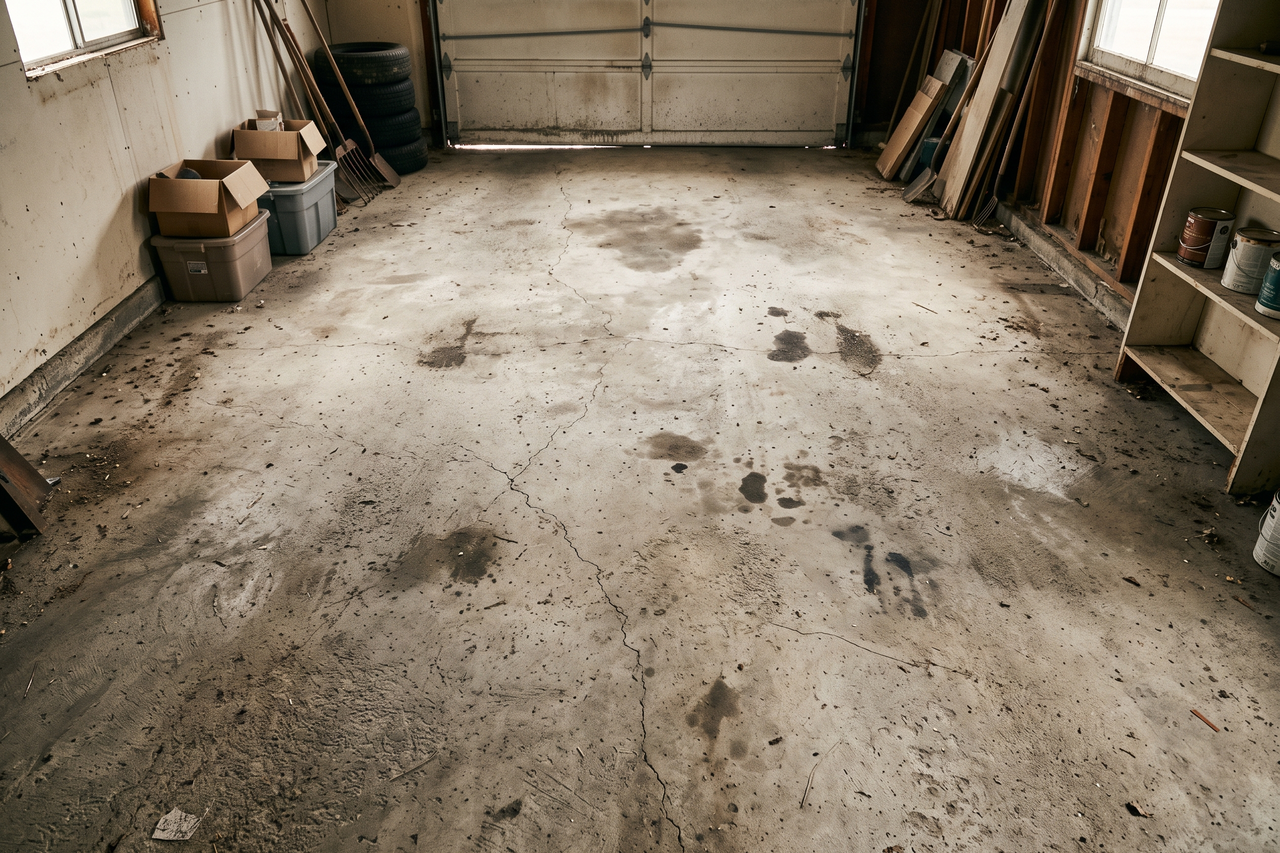
Of all the floors on a residential property, the garage slab typically takes some of the hardest daily use — and gets the least attention. Oil from vehicles seeps into the porous surface, salt and moisture from wet tires spread across the floor with each passing season, and the fine concrete dust that accumulates settles onto everything stored along the walls.
Poured concrete wasn’t designed for the demands of an active garage. Without a sealed surface, spills don’t sit on top — they penetrate. Grime works into the texture, and no amount of sweeping returns the floor to something that actually feels clean.
A DIY kit or a can of floor paint seems like an easy fix in the store. The trouble is grip: on concrete that was never mechanically prepared, the product has little to hang onto. Daily vehicle traffic, heat from hot tires, and swings in temperature usually expose that weak bond long before a properly installed system would show wear.
You Don't Have to Know Which Garage Floor Coating Is Right
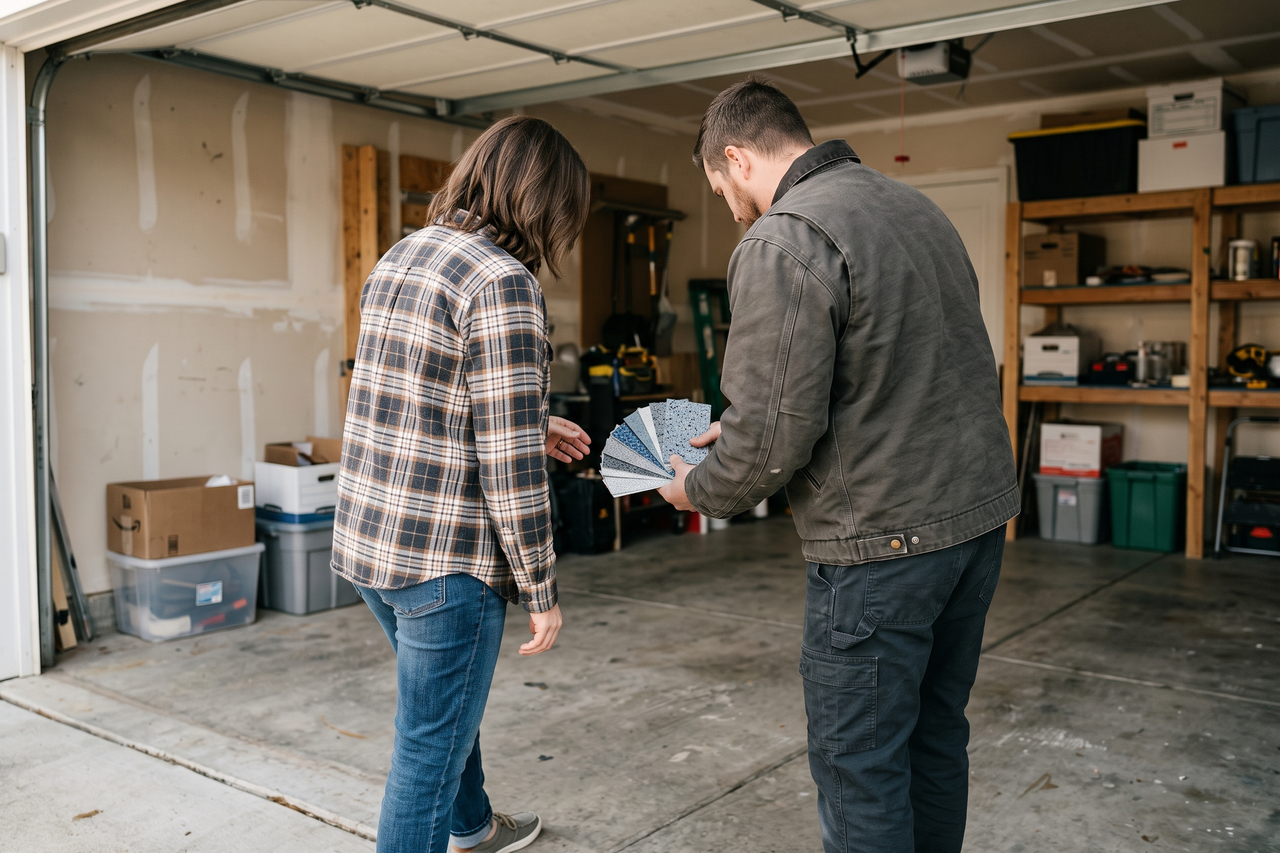
Would you pick a tailored suit without anyone taking your measurements? A garage coating works the same way. The right system hinges on how the garage gets used, how much direct sun hits the slab, what the concrete shows on inspection, and the look you want.
Before anyone talks finishes, a flooring contractor studies the concrete: where the cracks run, whether there are signs of moisture, and what existing coating or sealer is on it. From there the options narrow. Flake blends add color and grip and tolerate the wear of a busy working garage. Metallic finishes give a standout look for garages that double as hobby or showcase spaces.
Your Garage. Your Style. Three Simple Steps.
From describing your garage to parking on a finished floor, here’s how it goes.
01
Show Us Your Garage
Tell us what happens in the garage on a normal day, what shape the floor is in, and what you want to fix.
02
Choose Your Floor
The flooring contractor inspects the slab, goes through coating options and finish choices, and builds a quote around the specific conditions and goals of your project.
03
Come Home to a Finished Garage
The contractor carries out the surface preparation, installs the coating system, and walks you through what to expect during the curing period before handing the space back to you.
Ready to See What Your Garage Could Become?
Share a bit about the garage and the result you’re after. We’ll work to connect you with an independent flooring contractor who can review the project and, if it’s a fit, prepare a customized quote.
The Wrong Garage Floor Can Cost You Twice
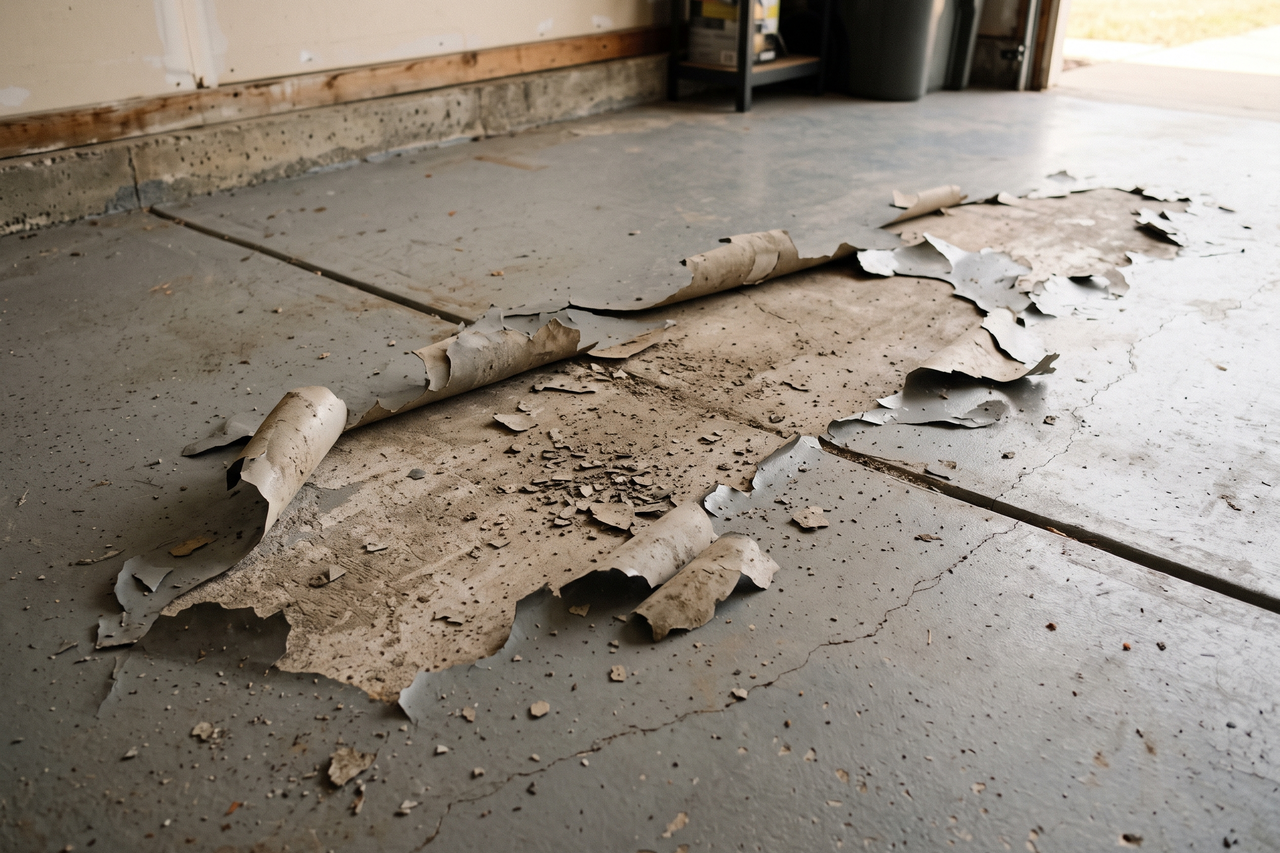
Why do some garage coatings let go early? Usually several factors stack up. Inadequate surface preparation is often part of the problem, along with unchecked moisture, a product poorly suited to the conditions, or application in temperature or humidity outside the product’s range. If the concrete isn’t opened to a proper profile and existing damage isn’t repaired, the new coating starts at a disadvantage, and problems like hot-tire pickup or peeling edges become more likely.
Putting fresh coating over a failed one doesn’t work. The old material needs to come off down to bare concrete first so the new layer has something to bond to, and that removal adds labor and material cost of its own.
Choosing the right system installed over properly prepared concrete tends to be a better investment than a less expensive job that later requires stripping and starting again.
A Garage You're Proud to Come Home To
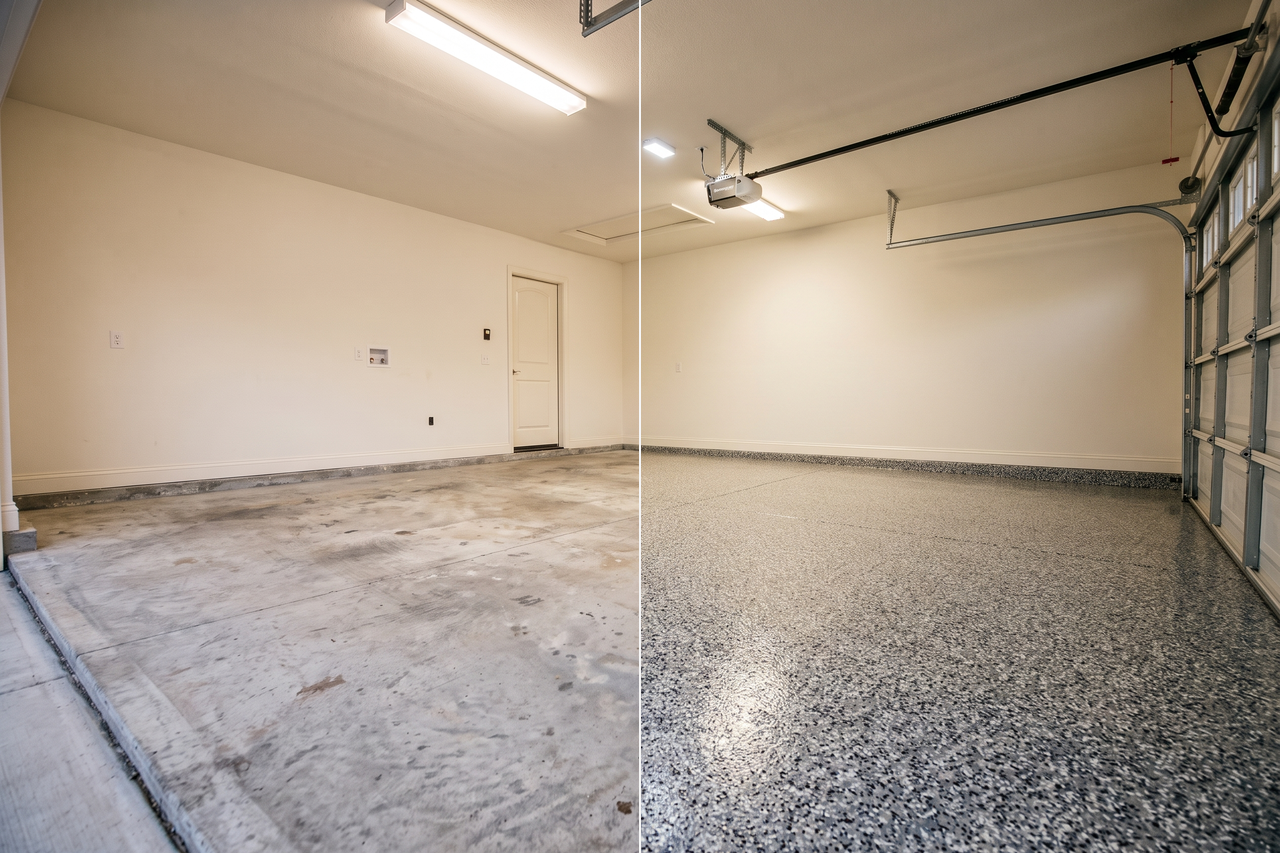
Once the floor is sealed, the whole garage functions differently. Road grime, salt, and oil sit on the surface where they can be addressed rather than penetrating into porous concrete. A mop handles what once required considerably more effort.
The practical difference is immediately apparent. Cleaning a coated floor is a fraction of the effort — grease and debris can be dealt with at the surface rather than working deeper into the texture. Workshop tasks, organized storage, and everyday parking all become noticeably cleaner and easier to manage.
Think about who uses the garage: you parking the car, someone working at a bench, guests walking through to the kitchen. A finished floor changes how all of them see the space and how well it works for each.
What Does Garage Floor Coating Cost?
Square footage is only one piece of the price. The concrete’s condition and the prep it needs, which coating system is chosen, and the finish style all factor in, and solid color, flake, and metallic finishes each involve their own materials and labor.
Pricing is most accurate once someone has seen your floor. The contractor builds the quote from what the slab inspection shows and what you want out of the project, rather than a per-square-foot guess.
Common Garage Floor Questions
Will hot tires damage a coated garage floor?
Hot tires are a known weak spot for store-bought paints and roll-on kits. A professional-grade system over well-prepared concrete is designed to resist that heat far better. Both the prep and the product matter, so the contractor suggests a system based on how you park and what else happens in the garage.
Is an oil-soaked or cracked garage slab a lost cause?
Not necessarily. Cracks and surface damage get repaired as part of preparing the concrete, and oil-stained areas are degreased and pretreated before coating. Concrete soaked deeply with oil needs a closer look, and the contractor can tell you honestly what that slab can handle.
How slick is a coated garage floor when it gets wet?
Any glossy floor gets slicker when it’s wet. Flake broadcast into the coating gives your feet more grip, and an anti-slip additive can go into the topcoat where water tends to collect, such as by the overhead door or around a drain.
How soon can I park in the garage again?
It varies with the system used and the temperature and humidity while it cures. Before starting, the contractor lays out when you can walk on the floor and when the car can come back in, so the household can plan around it.