Epoxy vs. Polyaspartic Flooring: What's the Difference?
Both coatings protect concrete, yet they behave differently as they cure, react differently to sunlight, and ask different things of the installer. No single answer fits every floor. This comparison sticks to the differences that matter once you are dealing with a real slab in a real space.

The Short Answer
Epoxy has the longer track record: tough, common, and familiar to professional contractors on both home and commercial jobs. Polyaspartic generally cures faster than many traditional epoxy systems, holds its color better in sunlight, and can be applied across a wider span of temperatures. Those strengths matter in certain settings, not all of them. The better fit for your floor comes down to sun exposure, temperature, slab condition, and how you use the space. We'll work to connect you with an independent flooring contractor who can review the project and, if it's a fit, prepare a customized quote that reflects your floor's needs.
Key Differences
Epoxy and polyaspartic coatings both protect concrete and create an attractive, easy-to-clean surface. They differ in how they cure, how they respond to sunlight and temperature, and how much working time they give the installer.
Epoxy
Epoxy is a two-component product: mix the resin with its hardener and a chemical reaction produces a hard, dense layer bonded to the ground concrete. Once cured, it stands up to cars, people, and the chemicals typical of homes and light commercial spaces. It comes in solid colors, flake blends, and metallic looks. Because it stays workable longer, installers have more control on big floors and multi-coat builds.
Polyaspartic
Polyaspartic belongs to the polyurea family and generally cures faster than many traditional epoxy systems. That helps when keeping downtime short is a priority, but it also gives the installer less working time, so application has to be precise and well paced. Polyaspartic topcoats are formulated to be UV-stable, so they resist the color change some epoxies show after extended sun. They also stay flexible through a broader temperature swing than most standard epoxies.
Which Is Right for You
Is one simply better? No. Either can deliver a tough, good-looking floor when applied correctly over properly prepared concrete. The real question is which suits your space. Sun exposure, how much disruption you can tolerate, the slab’s condition, and the way the room is used all go into the contractor’s recommendation.
Durability
On overall toughness, the two are closer than you might think. Each creates a hard, stain-resistant surface that holds up far better than bare concrete, paint, or most retail products. Where they really part ways is in specific properties.
Sunlight is the clearest example. Standard epoxy can turn yellowish after extended UV exposure, which matters if light pours in through windows, an open garage door, or skylights. UV-stable polyaspartic topcoats resist that shift, which is why they are popular for sunny rooms, covered patios and carports, and spaces with plenty of daylight.
Temperature is the other. Cold can affect epoxy both while it cures and afterward in unheated spaces. Polyaspartic keeps its flexibility and grip over a wider temperature span, an advantage in garages, sheds, and commercial buildings where the heat and air are not controlled.
Install Time
Prep often takes up a large share of the project and shapes the end result. Read concrete preparation for epoxy flooring next if you want to see what that stage involves.
Where do the two systems differ most on scheduling? Between coats. Polyaspartic generally cures faster than many traditional epoxy systems, so the coating steps can move ahead with less waiting. With a multi-coat epoxy build, every layer has to set up before the next goes on, which stretches out the application phase.
For you, that can change how much of a disruption the project causes. For the installer, a system with a narrower working window, so prep must be complete and site conditions confirmed before the first coat goes down.
How long will your project take? That hinges on your floor — its size, the prep it needs, how many layers the chosen build includes, and the conditions on site. Your installer goes over the likely timeline before anything starts.
Which Is More Expensive?
Wondering how both systems are priced and what a complete quote should include? Visit the epoxy floor coating cost guide to see the full breakdown.
At a similar quality level, polyaspartic materials usually cost more than standard epoxy, since its UV-stable chemistry and cure profile come at a premium. Labor may be comparable depending on the job, and a shorter coating phase can sometimes make up part of the material difference.
Should cost decide it? Not on its own. Polyaspartic over poorly ground concrete, or standard epoxy in a sun-drenched room, will both underperform a system that suits the space. Judge the floor by what it delivers across its service life, not just by the first number you see.
Which Is Better for Your Garage?
The right floor coating depends on your budget, how you use your garage, and the performance characteristics that matter most to you. Both epoxy and polyaspartic systems can create an attractive, durable surface when installed correctly.
When Epoxy Makes Sense
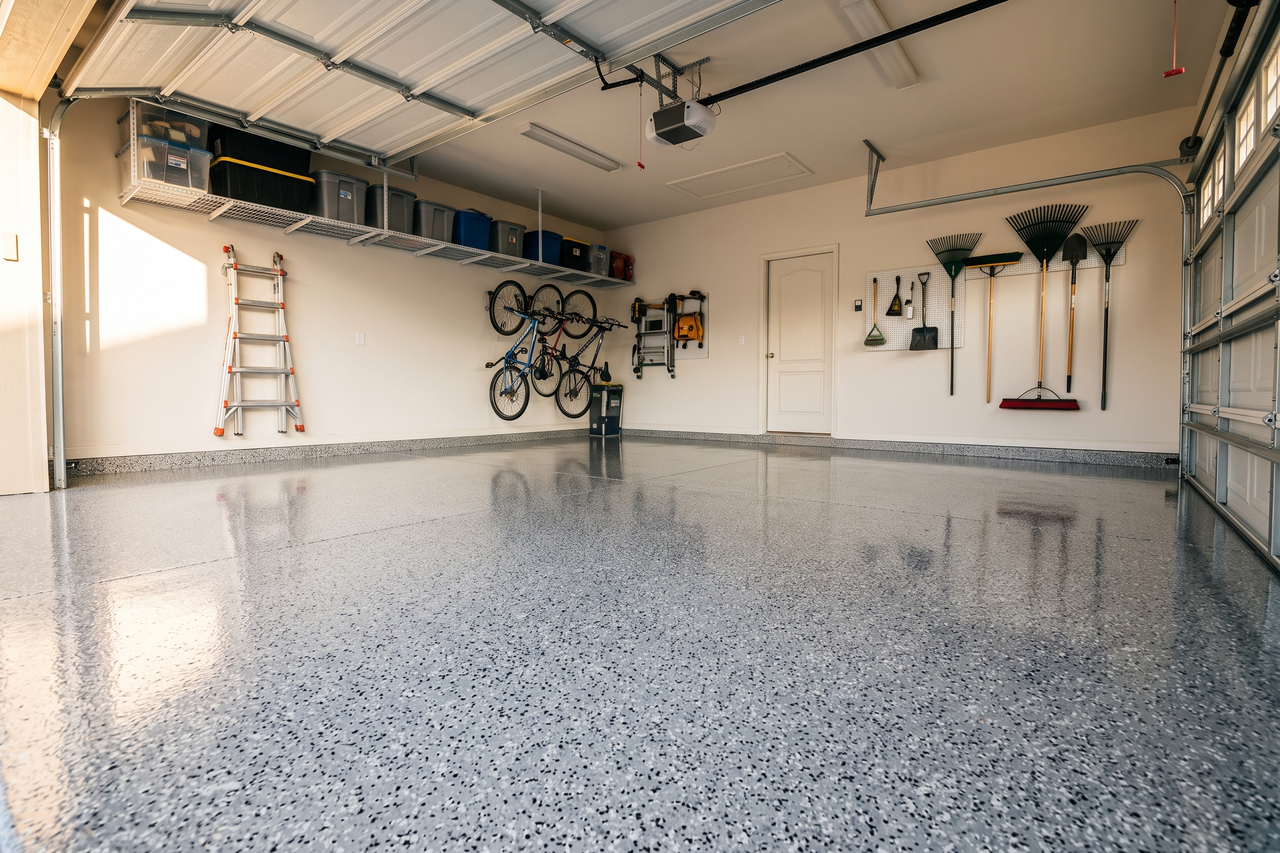
For a typical home garage that does not get much direct sun, or one that is heated and cooled, epoxy is a solid pick. Its extra working time lets the installer handle large areas and tricky layouts without rushing. Solid colors and flake finishes are easy to find in epoxy. It has a deep history in residential garages, and most professional installers know well how it behaves there.
When Polyaspartic Makes Sense
Does sunlight stream across your garage floor through the door or windows? Do you have skylights, or a covered slab outdoors? In those spots, polyaspartic’s UV-stable chemistry keeps its color where an unprotected epoxy surface might drift. It is also worth considering when temperatures in the space swing widely, or when keeping disruption to a minimum truly matters. Many projects pair a polyaspartic topcoat with an epoxy base, a proven hybrid that uses the best trait of each.
Why Professional Installation Matters
Planning a garage specifically? Finish choices and the flow of a project are laid out in the garage floor coatings guide, from first visit through final coat.
How a floor looks down the road has more to do with matching the system to the slab than with choosing epoxy or polyaspartic. Both depend on concrete that has been mechanically profiled, cleaned, and checked for moisture to bond the way the manufacturer intends.
The flooring contractor we connect you with inspects the concrete first, then recommends a system and explains why before starting. If site conditions rule out a certain coating, you should hear that while reviewing the estimate — not after the material is already on the floor.
Frequently Asked Questions
Is it possible to combine the two, with one system layered on top of the other?
Yes — layering them is common and accepted. An epoxy base delivers deep adhesion and build, while a polyaspartic topcoat contributes color stability under sunlight at the surface. Going the other way, with epoxy over cured polyaspartic, is harder to do well and usually avoided. The contractor determines which order the current surface can handle.
Does polyaspartic genuinely shorten the project timeline?
It can shorten the coating phase. Because polyaspartic generally cures faster than many traditional epoxy systems, there is less waiting between coats. Prep, though, stays the same no matter what goes on top — grinding, crack repair, and moisture checks require the same work either way. The overall timeline includes all of it, not just the coating. Your installer goes over the likely timeline before anything starts.
Is yellowing a concern for all epoxy floors?
Not for every floor. Some standard epoxies can yellow or turn chalky with sun exposure, depending on the product and how much direct light the floor gets. UV-stable polyaspartic and polyurethane topcoats are made to resist that, so they are a common final layer where sunlight is a factor. Whether it matters in your space comes down to the specific products specified and how much sun actually reaches the slab.
What about hot tire pickup — does one coating resist it better?
Hot tire pickup happens when a warm tire softens and grabs the coating, then pulls some of it up as it cools. It usually comes from a product that was not up to the job, weak prep, or driving on the floor before the cure was complete. A quality product from either family, applied over well-prepared concrete and allowed to cure fully before cars park on it, is better equipped to resist it. Prep and proper curing outweigh the choice of category.
Can I get flake, solid, and metallic looks with either coating?
Generally, yes — both families offer flake, solid, and metallic finishes. The exact colors, flake mixes, and metallic pigments depend on the manufacturer and which products the installer stocks. The contractor will show you the choices that work with the system recommended for your floor.
Is either system suitable for DIY application?
Not really. Professional-grade epoxy and polyaspartic are meant for trained applicators, and polyaspartic’s short working time takes experience and proper equipment to handle well. The kits sold at home centers are a different class of product — easier to apply, but not equal in performance to professional systems. A professional brings product knowledge and the prep skills to address what your particular floor calls for.
Ready to Choose the Right Coating for Your Floor?
Serving Russellville, AR and surrounding areas. We’ll work to connect you with an independent flooring contractor who can review the project and, if it’s a fit, prepare a customized quote for the coating system best suited to your floor.