
Epoxy Basement Flooring
in Russellville, AR
Give the lower level a finished floor that makes the whole room easier to use and enjoy.
Your Basement Shouldn't Feel Unfinished From the Floor Up
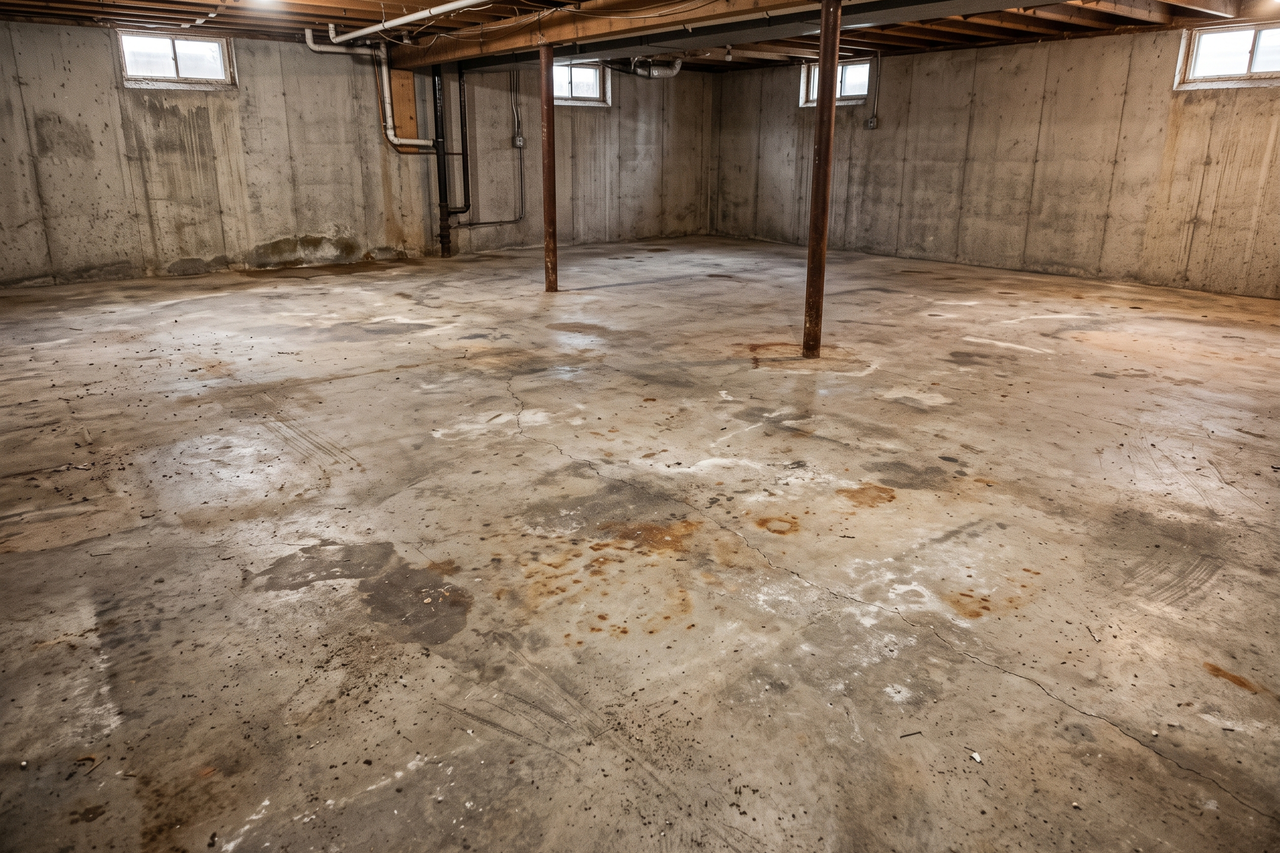
Most basements hold more promise than they deliver. The square footage is there for a gym, an entertainment area, a hobby room, or organized storage — but a bare concrete floor makes it difficult to reach any of that potential. The floor reads as unfinished, and so the room does too.
Bare concrete basement slabs shed fine dust, soak up spills, and develop stains that are hard to address once they’ve had time to set. A floor in that condition becomes a reason to avoid the space rather than a foundation for actually using it.
A finish that works fine upstairs can struggle on a slab at or below grade. Choosing a coating system made for concrete gives the basement a sealed surface suited to its conditions rather than one working against them.
The Right Basement Floor Starts With the Concrete Underneath
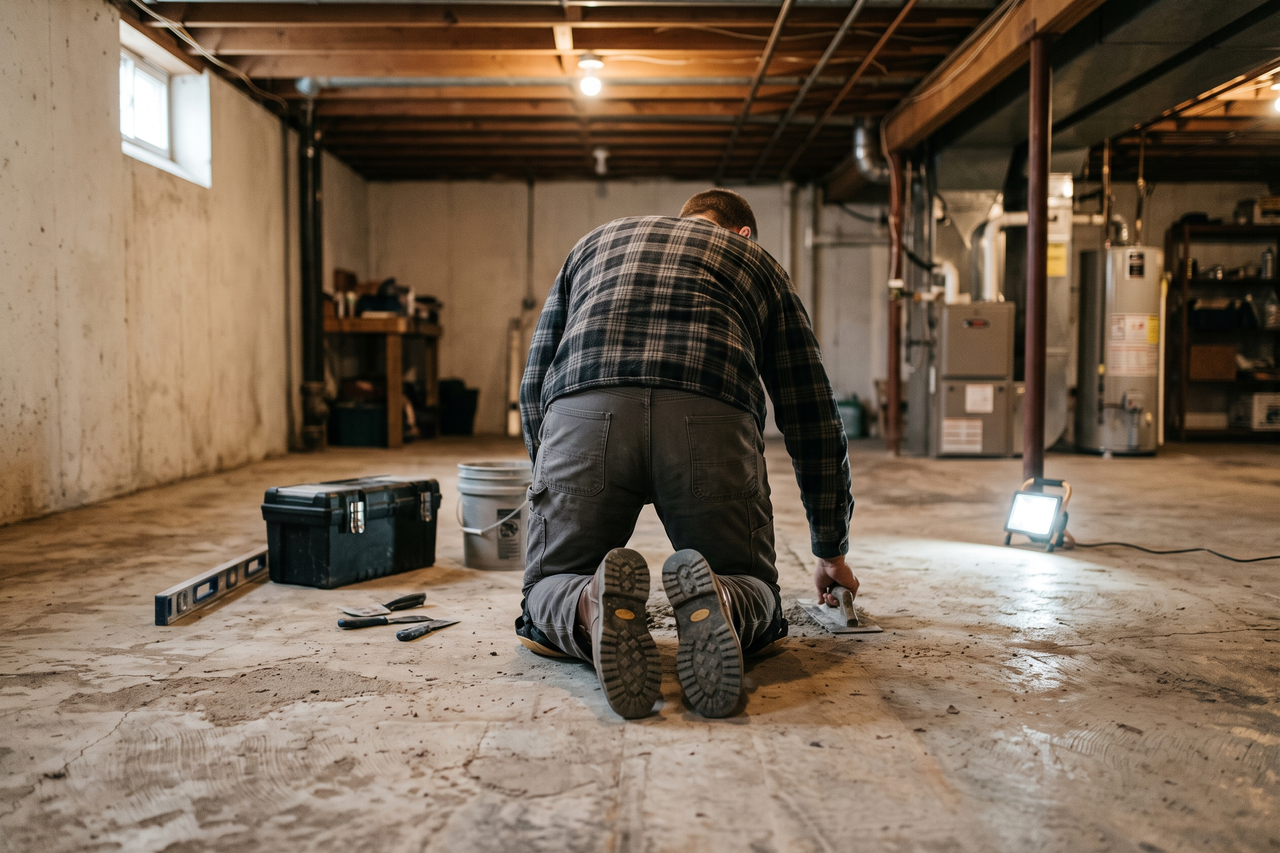
Basement slabs come with complications that above-grade concrete typically doesn’t have. Moisture — whether it moves through the slab itself or enters from below grade — is a primary concern. Old paint, adhesive residue, hairline fractures, and prior patches are also common, and each one affects how a coating will perform and what preparation needs to involve.
The contractor evaluates the slab before any coating system is selected — moisture testing is carried out where the concrete warrants it. A coating placed on a basement floor without that assessment may hold adequately at first and then develop problems as subsurface moisture works against the bond over time.
Once the condition of the slab is clear, choosing a finish gets easier. Solid color gives a simple, even look. Flake brings texture and color variation that stands up to steady foot traffic. Metallic epoxy creates a depth that painted floors can’t match.
A Better Basement Floor Is Easier Than You Think
Starting this project takes less effort than it might seem.
01
Tell Us About Your Basement
Tell us how you hope to use the basement, what you know about the floor now, and whether it has had moisture issues or an earlier coating.
02
Choose the Right Floor
After evaluating the slab, the contractor lays out which coatings that concrete can handle and suggests a system and finish that fit both the conditions and your plans for the room.
03
Transform the Space
The contractor finishes the prep, applies the coating, explains how curing works, and hands the room back for you to use.
Ready to Make Your Basement Feel Finished?
Has the basement floor been sitting on your to-do list with no clear starting point? Start by describing the space as it is and what you picture it becoming, and we’ll work to connect you with an independent flooring contractor who can review the project and, if it’s a fit, prepare a customized estimate.
Don't Turn Your Basement Floor Into a Project You Have to Do Twice
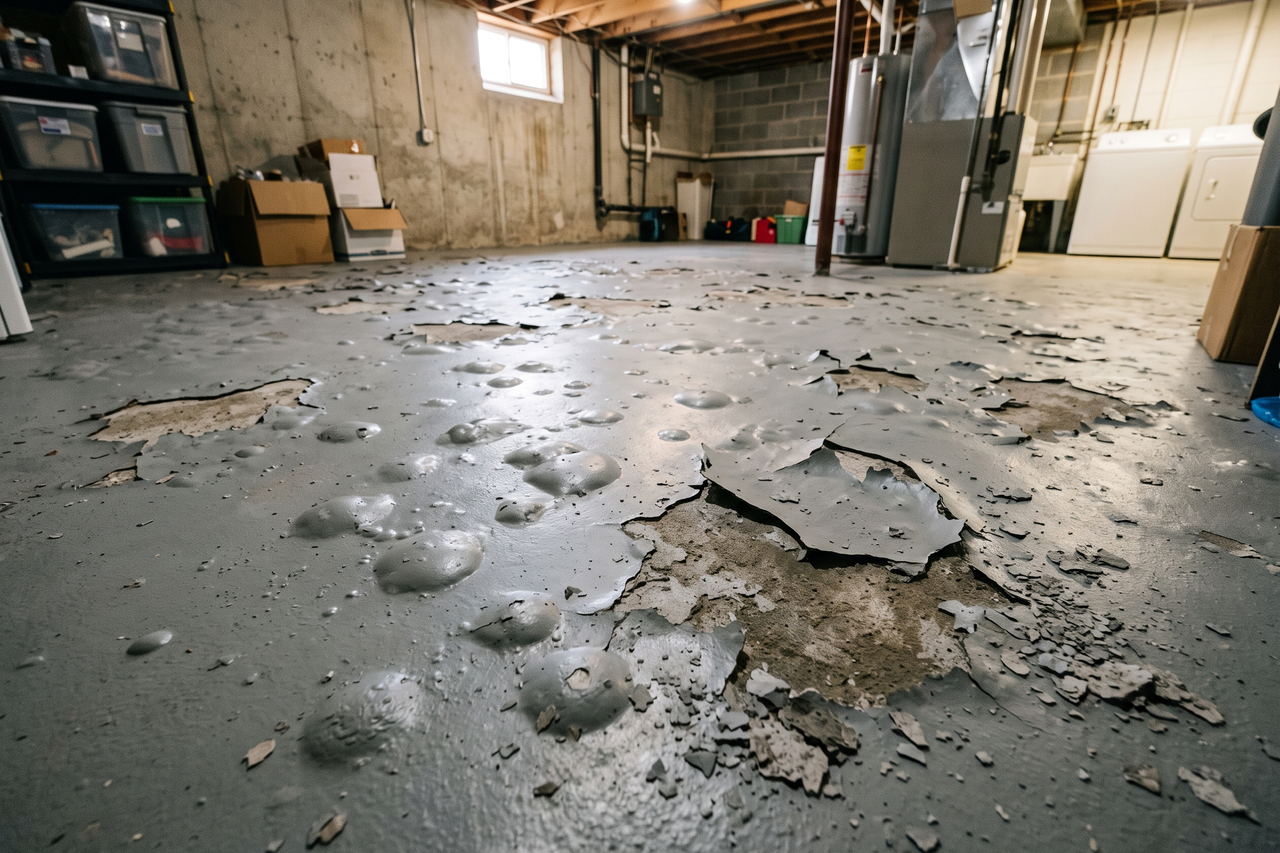
When a basement coating fails, the cause usually existed before the first coat went on. Leftover sealer or paint, a slab that was never properly profiled, and moisture nobody tested for are frequent culprits. These are ordinary conditions, yet any one of them leaves the new coating starting from behind.
Moisture moving up through a basement slab is easy to underestimate. Left unchecked before coating, it pushes against the underside of the coating and can cause blisters, lifting, or delamination.
Proper preparation takes more upfront work than simply rolling product onto concrete. It gives the coating a better foundation for long-term performance and reduces the likelihood of needing to strip the floor and start over.
A Floor That Changes How Your Basement Feels
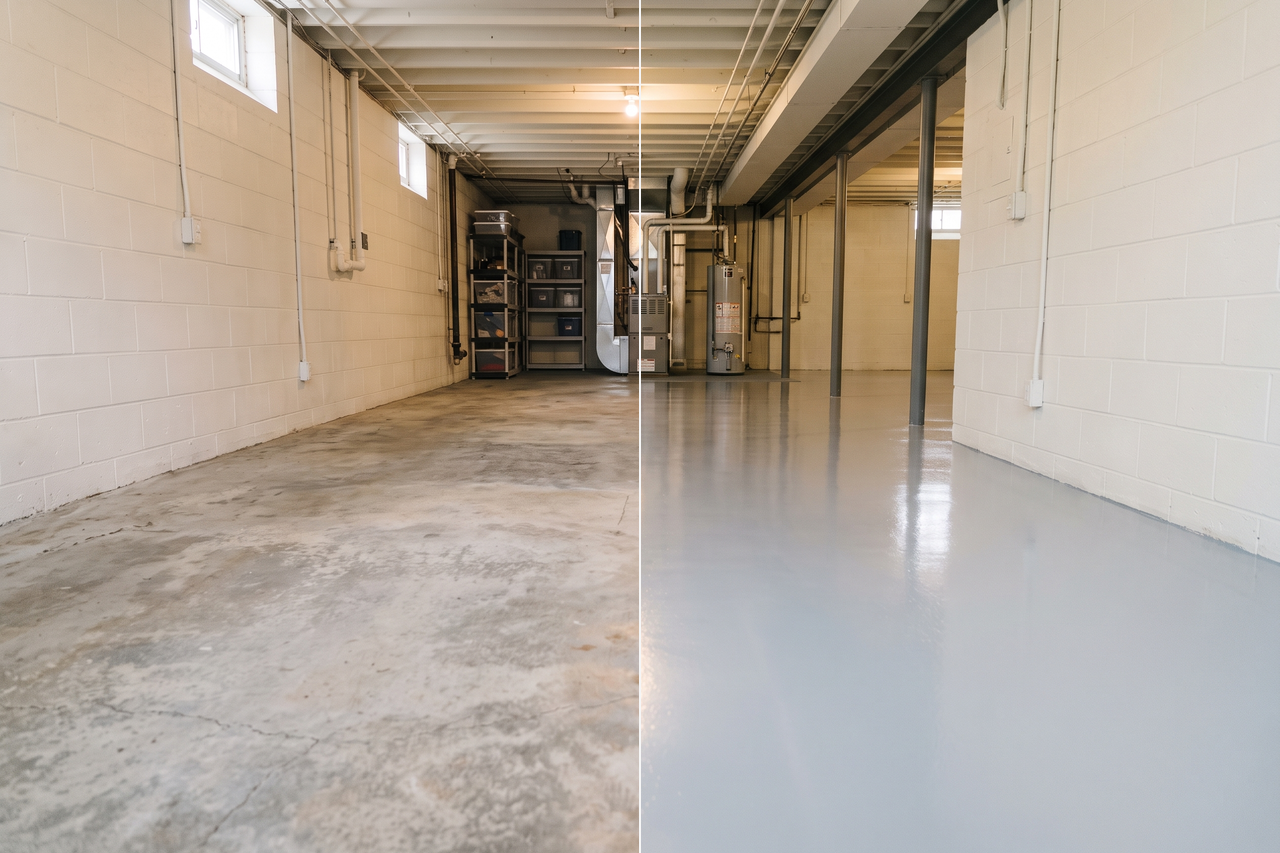
Coat the slab and the basement starts to feel different. Light bounces around the room instead of soaking into dull gray concrete, dirt no longer collects along the floor, and a spill can be wiped away before it absorbs.
That change carries through the whole level. A room people avoided because of the floor becomes a place to spend time. Storage gets easier to move through. A workout corner feels clean enough to use. A media room looks planned instead of thrown together.
Square footage alone undersells how much the floor shapes the way a basement comes across. A well-coated surface tells anyone walking down the stairs that the room is complete and meant to be used.
What Does Epoxy Basement Flooring Cost?
Several things affect the cost of a basement coating: the size of the floor, what the slab evaluation reveals, any old coating or adhesive that needs removal, how much crack repair is involved, any moisture-related prep, plus the coating system and finish you choose.
No two slabs are the same, so the clearest estimate comes from an in-person look at yours. The contractor puts the quote together based on the condition of the concrete and how you intend to use the room.
Common Questions About Epoxy Basement Flooring
My basement slab gets damp. Is coating still possible?
It hinges on how much moisture there is and its source, and both have to be evaluated before choosing a coating. In some cases a suitable primer system can manage it; in others the cause has to be fixed first. After assessing the slab, the contractor explains what the concrete can realistically handle.
Does a floor coating waterproof a basement?
No. A floor coating addresses the surface — it isn’t a waterproofing measure. Water entering the space from the exterior or through the foundation needs to be dealt with separately and resolved before a coating goes down. Applying a coating over an ongoing water problem generally leads to failure.
What happens to old paint, glue or carpet residue on the slab?
Existing coatings, paint, adhesives, and residue generally need to be removed so the new system can bond to properly prepared concrete. The contractor decides what preparation will bring the surface to the right condition for the new system.
How does a coated basement floor feel to walk on?
Underneath, it’s still concrete, so it feels firm and stays close to the slab’s temperature. The difference is at the surface, where rough, dusty concrete is replaced by a smooth, sealed finish. Area rugs and interlocking mats sit on a coated floor just as they would on any other.
What looks can a basement floor coating have?
Basements typically get one of three finishes. Solid color keeps things simple and even. Decorative flake adds texture and does a good job hiding scuffs and daily wear. Metallic epoxy creates a glossy, layered look for rooms where the floor should be a focal point. Which one suits you depends on the room’s use and the look you want.