Commercial Epoxy Flooring
in Russellville, AR
A finished floor surface chosen for the foot traffic, carts and cleaning routine your business puts it through.
Your Floors Should Work as Hard as Your Business Does
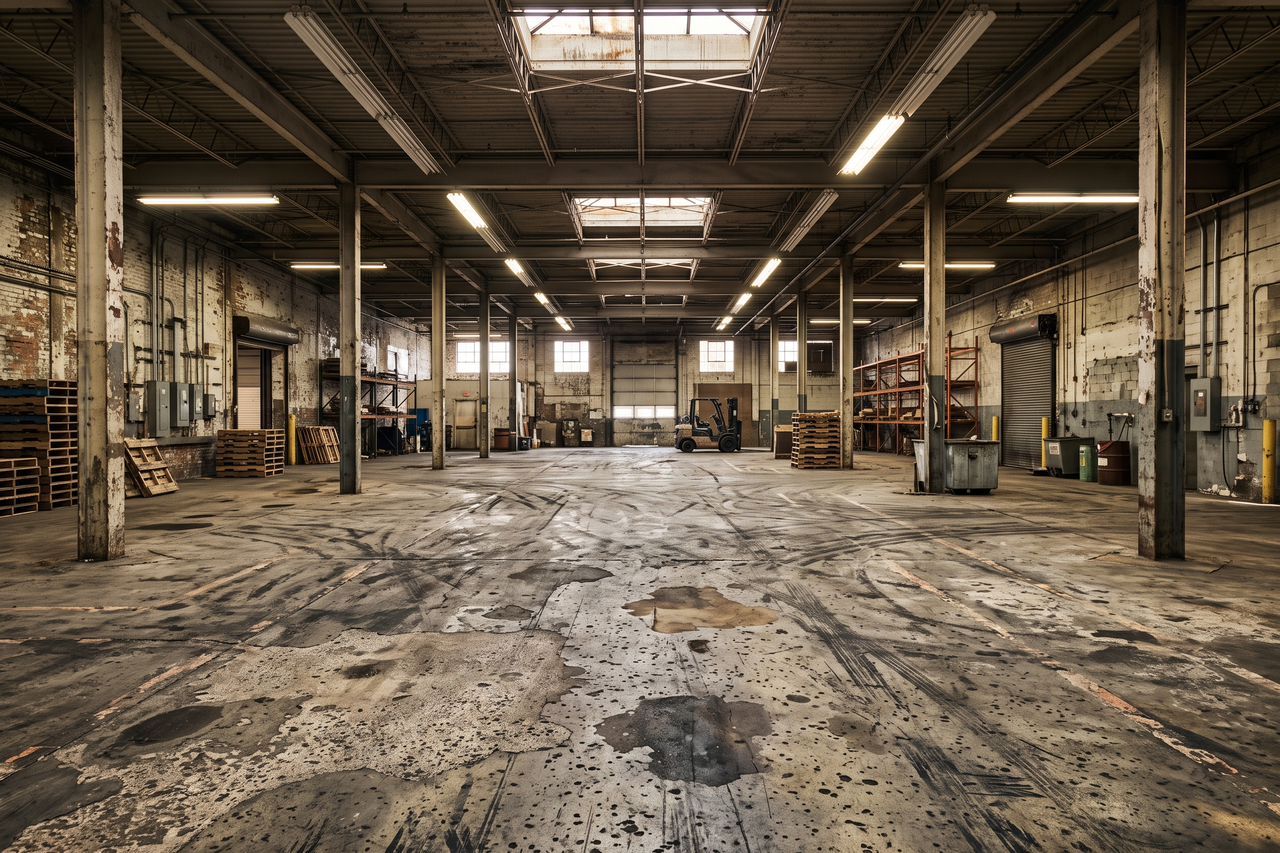
A commercial floor goes through more than most people realize when they aren’t the ones managing it. Cart wheels and foot traffic wear the surface over time. Cleaning chemicals get applied repeatedly across the same zones. Spills settle in, drop areas accumulate staining, and whatever the concrete started as, it eventually shows the accumulated wear.
That deterioration carries information. A floor that looks neglected in a customer-facing area communicates something to everyone walking through it — before any product is shown, before any service is discussed. The condition of the floor becomes part of the impression the business makes on visitors.
Unsealed concrete also makes routine cleaning harder over time. As the surface degrades, it holds grime more stubbornly and resists the kind of maintenance that keeps a commercial space looking sharp on a daily basis.
The Right Floor Starts With Understanding Your Space
Commercial properties cover a wide range of operating environments. What a retail floor contends with on a busy afternoon differs from what a warehouse aisle handles during a full operating shift. A showroom floor has appearance expectations that don’t apply to a back-office corridor. Service bays have different slip and chemical resistance requirements than office lobbies or food-preparation areas.
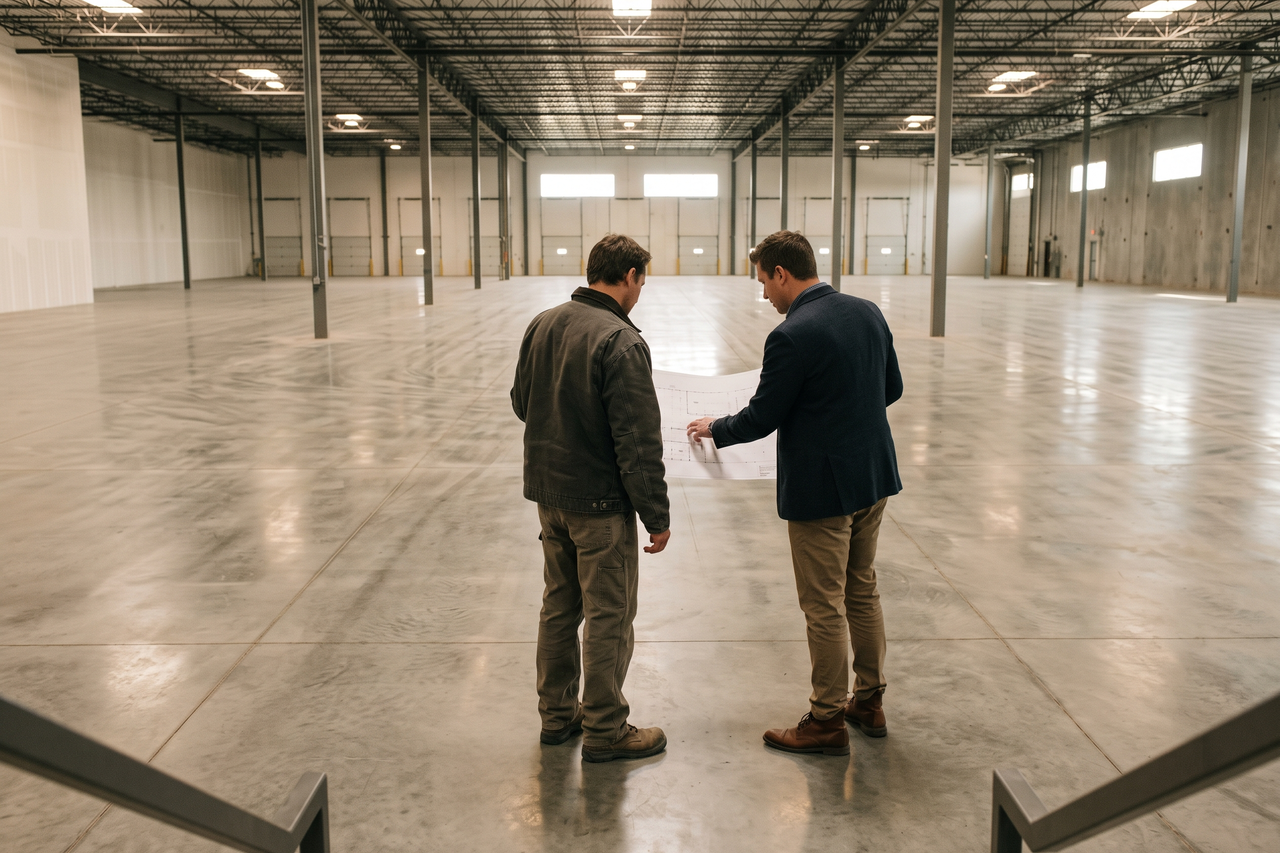
A contractor evaluating a commercial floor starts with how that particular space actually functions — what moves across it, what it’s cleaned with, whether appearance is a driving priority, and what the installation logistics look like given the business’s operating schedule. System recommendations follow from that understanding, not from a default product selection.
On the aesthetic side, options include solid single-color finishes, broadcast flake systems that add texture and color variety, and metallic finishes suited to showroom and customer-facing environments where the floor is part of the overall atmosphere.
A Commercial Flooring Project Without the Guesswork
Commercial owners juggle schedules, budgets and tenants at once, so a clear sequence helps. Here is how a project typically moves from first inquiry to finished floor.
01
Tell Us About Your Property
Describe what kind of facility it is, how people and equipment use it, what shape the current floor is in, and which operating constraints the work has to respect.
02
Get a Flooring Plan
An independent contractor looks at the slab, weighs how the facility really operates, and proposes a coating system and prep plan sized to that particular floor.
03
Transform Your Space
Surface preparation and coating are handled by the contractor, who reviews the planned sequence with you ahead of time. Scheduling depends on the project and the contractor.
Planning a Commercial Flooring Project?
Let us know what kind of facility you manage and the job you expect the floor to handle. We’ll work to connect you with an independent flooring contractor who can review the project and, if it’s a fit, prepare a customized estimate. Floor plans or photos are useful if you have them.
The Wrong Floor Can Become an Expensive Problem
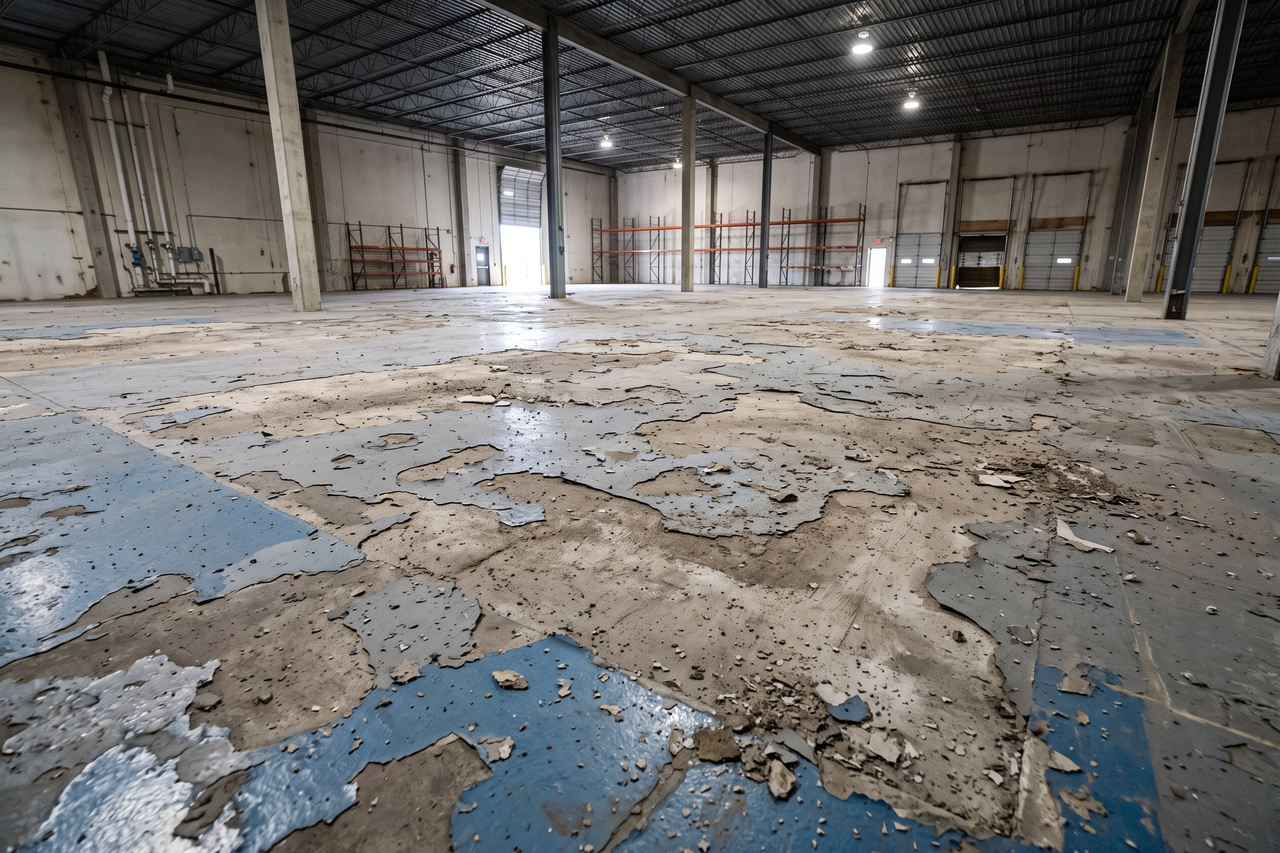
Picture a retail floor where the coating has started flaking near the entrance. That damage doesn’t stay cosmetic: loose edges turn into trip hazards, and cleaning takes more effort while delivering worse results.
Correcting a failed commercial coating inside an active facility is disruptive in ways that go beyond material and labor expense. The space must be cleared, the old coating removed, the slab addressed again, and the installation repeated — at a time that wasn’t planned for and may not align with the business’s calendar or budget cycle.
Matching the right system to the facility’s actual conditions from the outset, and preparing the concrete to the appropriate standard, is how that outcome gets avoided.
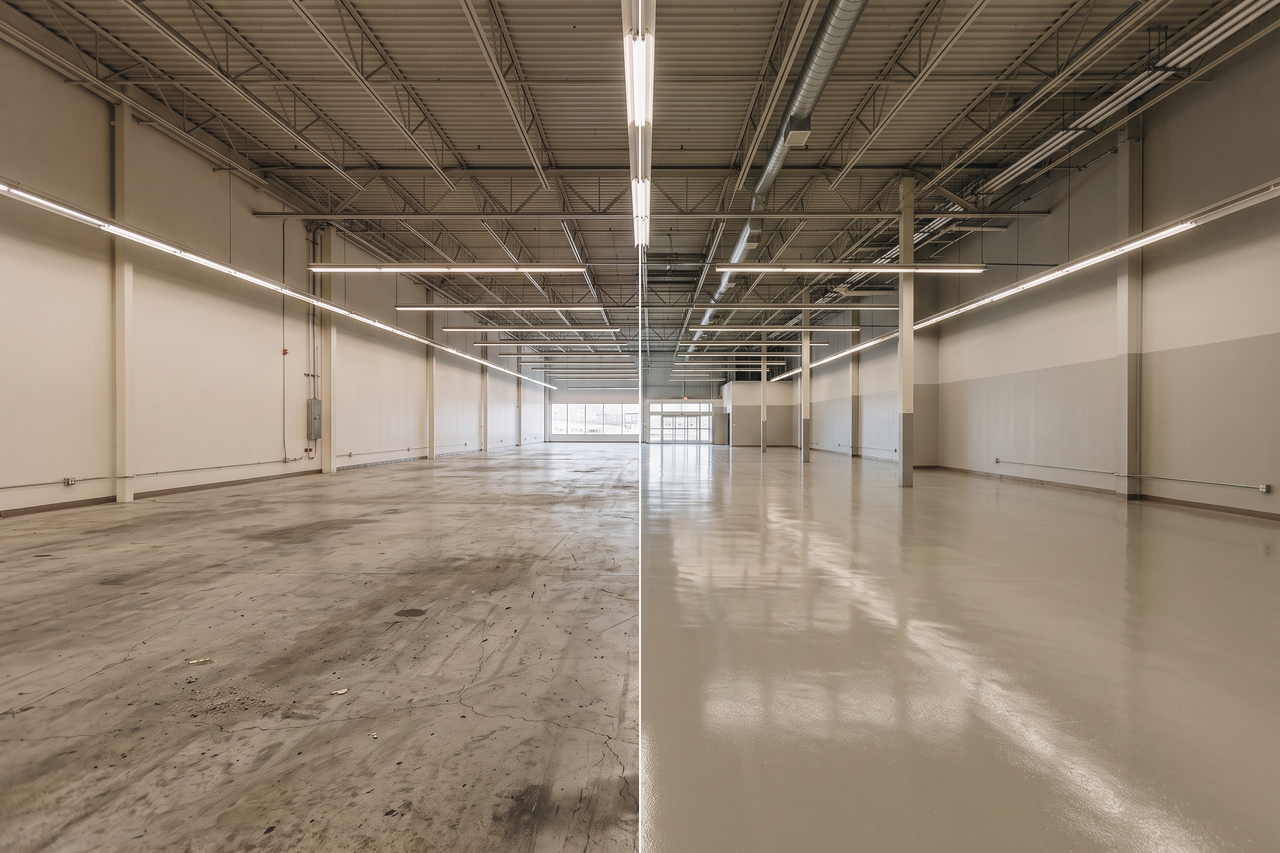
A Floor That Makes Your Space Work Better
A commercial floor that’s properly matched to the space becomes easier to manage on a daily basis. Sealed surfaces resist staining in a way raw concrete cannot. Mopping picks up more and leaves less behind. The floor holds up under the traffic volume without developing the degradation that unprotected concrete accumulates over the same period.
Sealed floors also bounce more light around a room, so aisles and work areas can look brighter with the same fixtures. Where clear layout matters — retail aisles, service counters, picking zones — striping, color zones and aisle markings may be added, depending on the system selected and the contractor’s recommendation for that facility.
The result is a floor that contributes to how the business operates rather than working against it.
What Does Commercial Epoxy Flooring Cost?
Price depends on several variables working together: total floor area, how sound the slab is, the amount of grinding and repair needed, the coating system, and the finish. Special requirements such as higher slip resistance, chemical exposure or textured surfaces can widen the scope and move pricing.
Whether work can be phased or fitted around the operating schedule depends on the project and the contractor; that is something to discuss while the estimate is being prepared.
Common Commercial Flooring Questions
Can the project work around our business hours?
Possibly. Some facilities can be done in sections while other areas stay open; others are better handled in a single closure. What works depends on the project and the contractor, and it gets sorted out during the estimate discussion.
What does daily care look like for a coated commercial floor?
A sealed commercial floor is noticeably simpler to keep clean compared to bare concrete. Surface spills are easier to address before they settle in, and routine sweeping and mopping handles most day-to-day upkeep. The coating holds up to cleaning frequency better than unprotected concrete does over the same period of use.
Will the floor hold up to heavy carts and equipment?
That hinges on which system is chosen and the loads the floor actually sees. Heavier equipment may call for thicker builds or tougher abrasion resistance. Before recommending anything, the contractor looks at how often carts and equipment cross the floor and how heavy they are.
How is a coating system chosen for a particular business?
Start with how the floor is used: traffic levels, chemicals it contacts, cleaning methods, how it needs to look, and any timing limits on the work. The contractor weighs those factors and suggests a system that fits your space rather than a standard catalog pick.